The Luminous Home
Speculative Design Project
A sensory, emotionally intelligent home designed to support mental wellbeing in urban life.
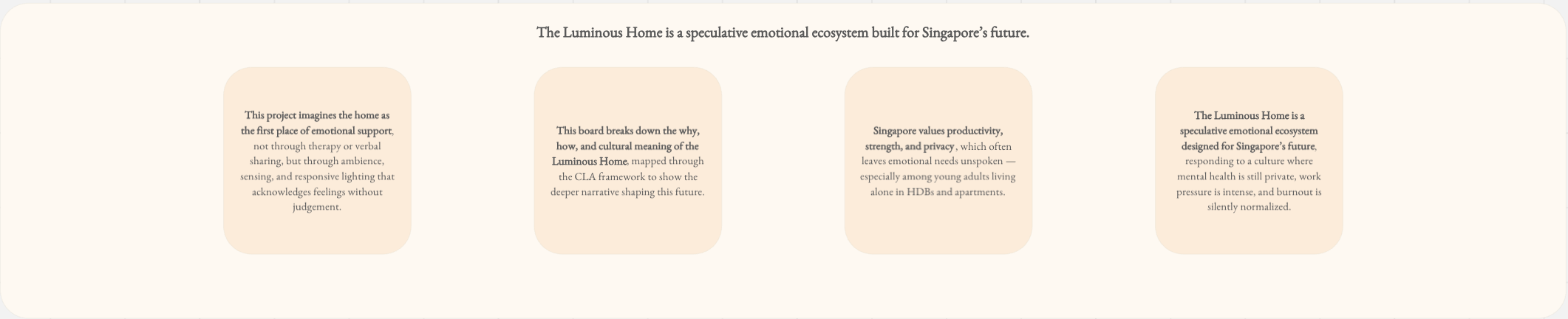
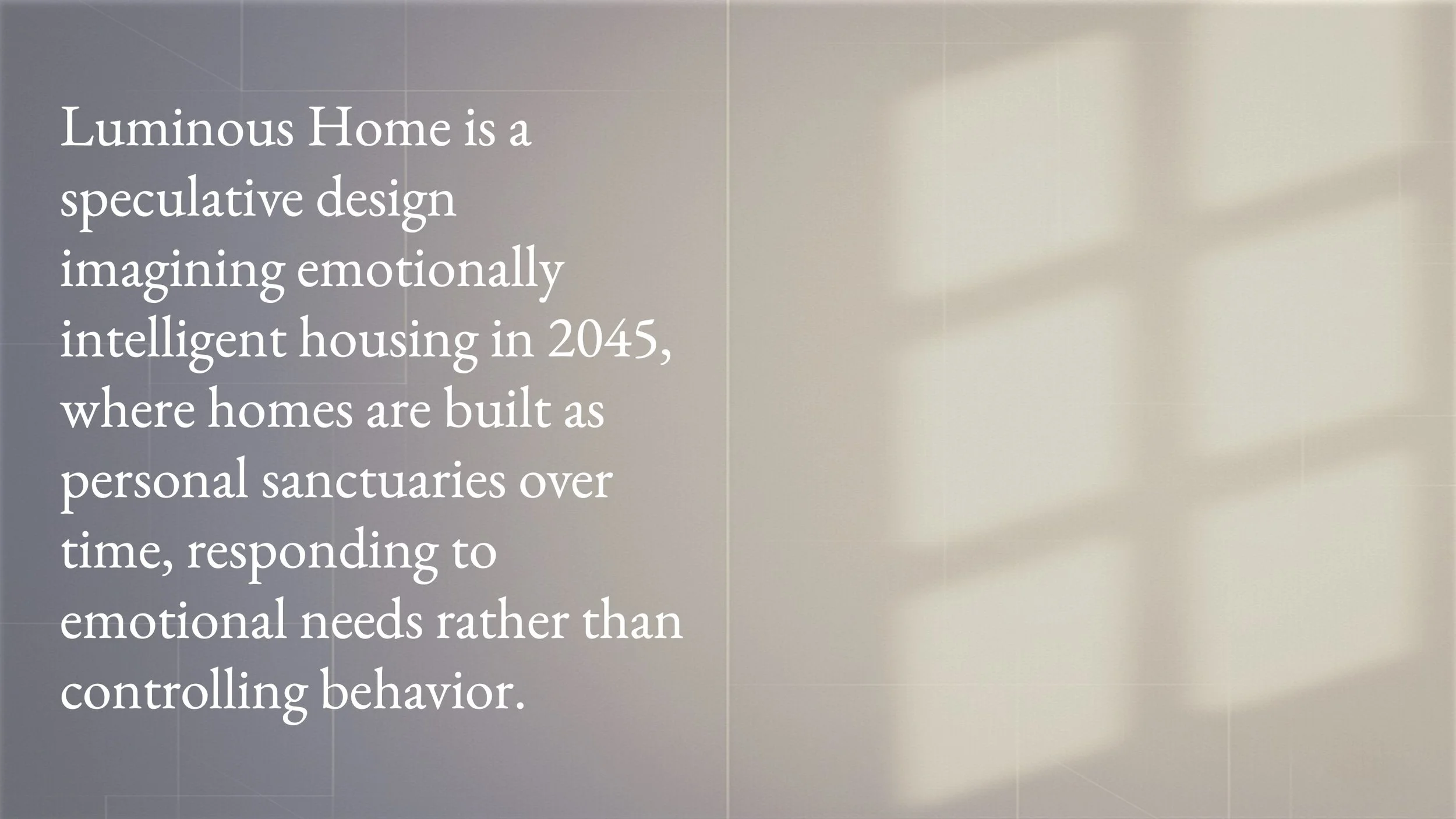
The Luminous Home is a speculative design project imagining how homes in 2045 could act as emotional co regulators rather than passive spaces. The project explores how architecture, light, sound, and ambient intelligence can quietly support mental health without replacing human care.
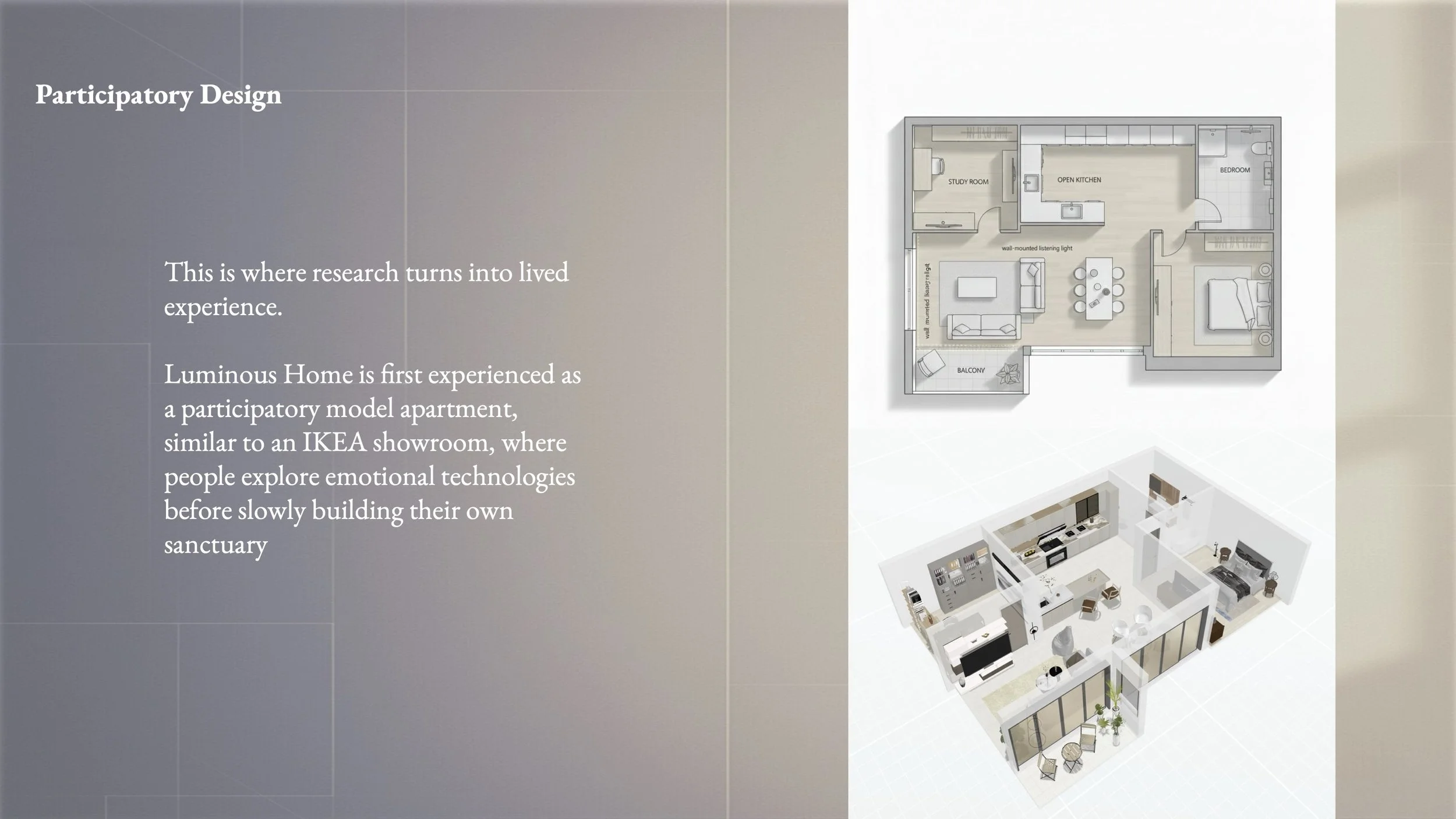
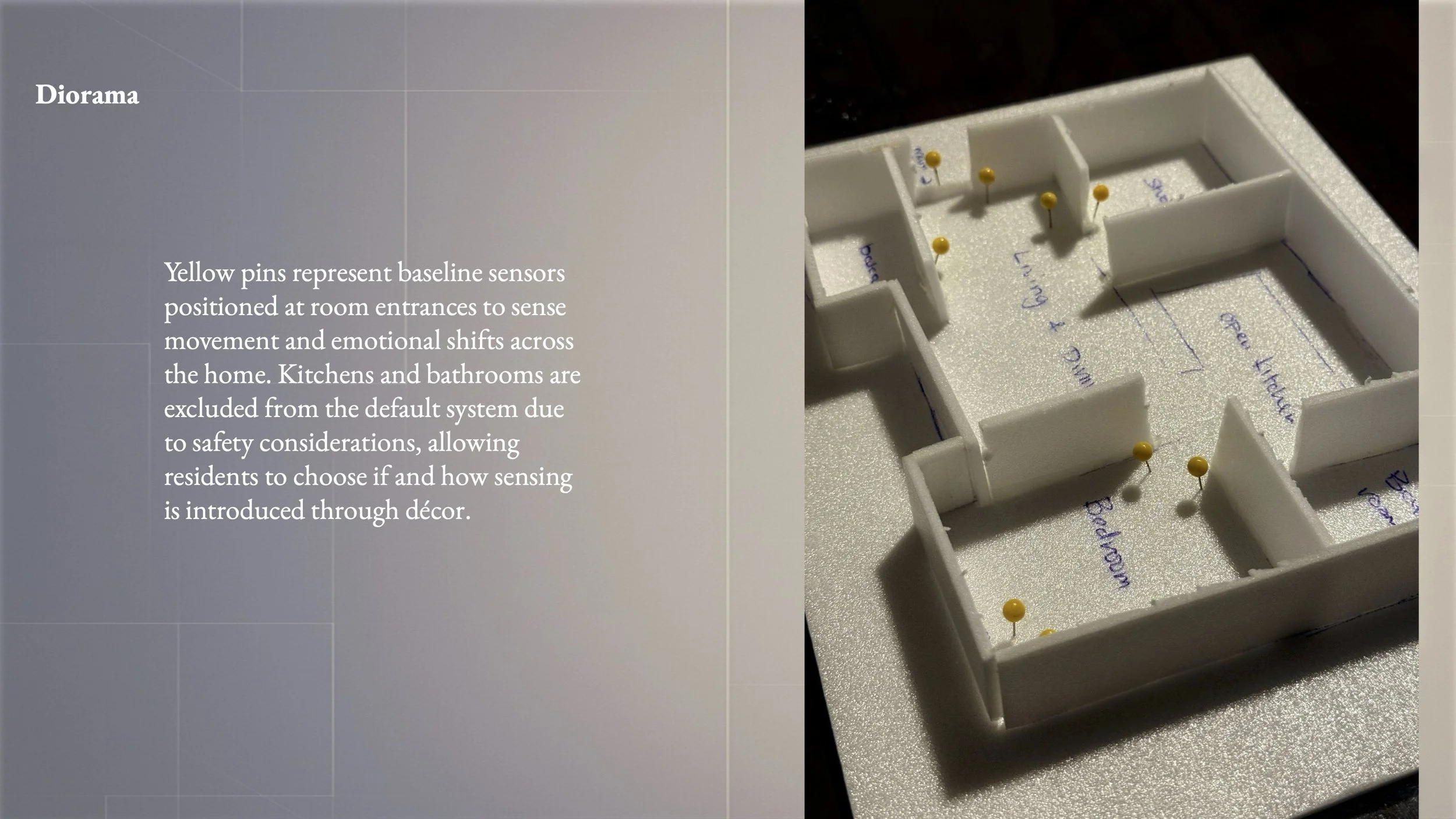
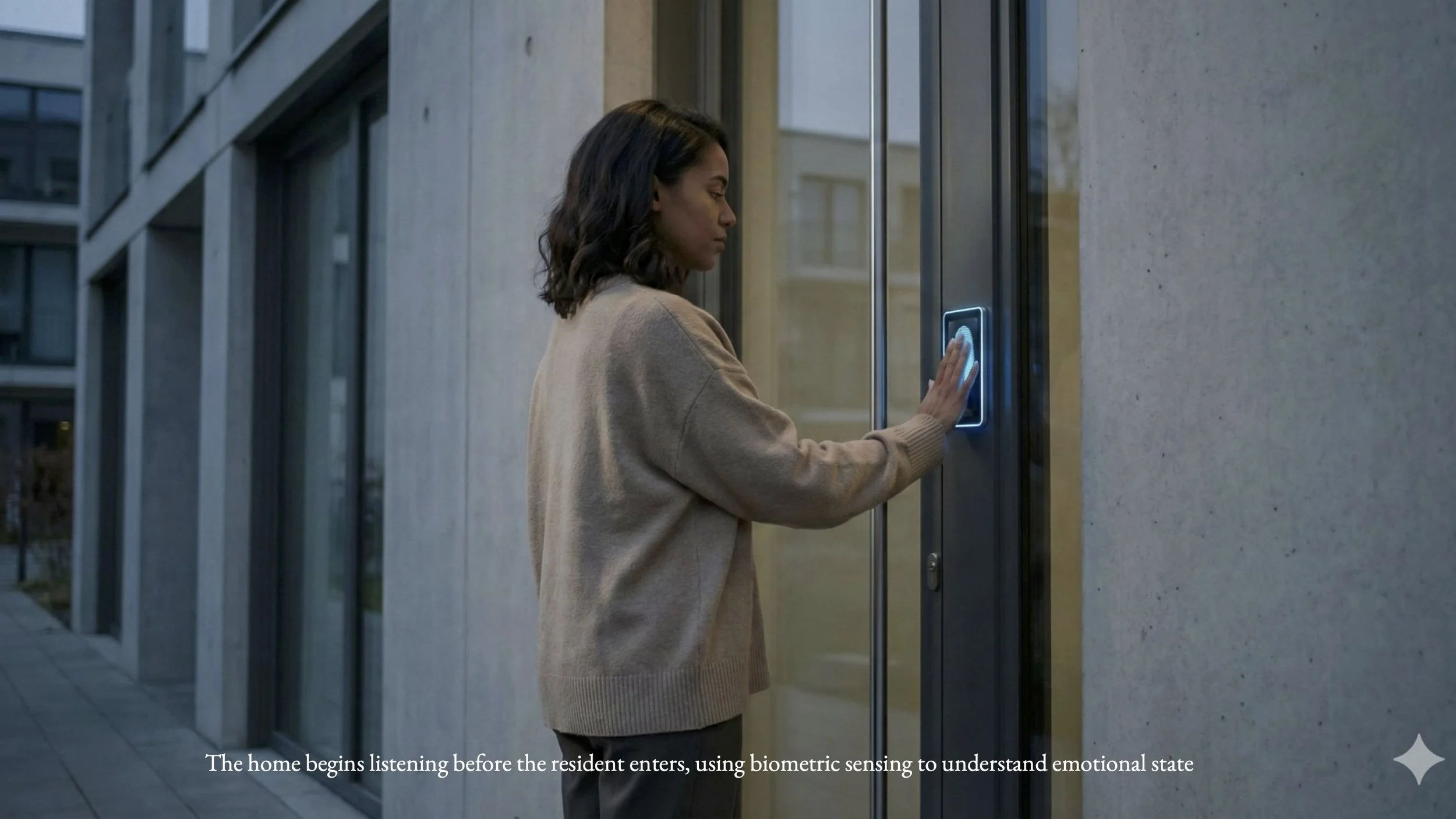
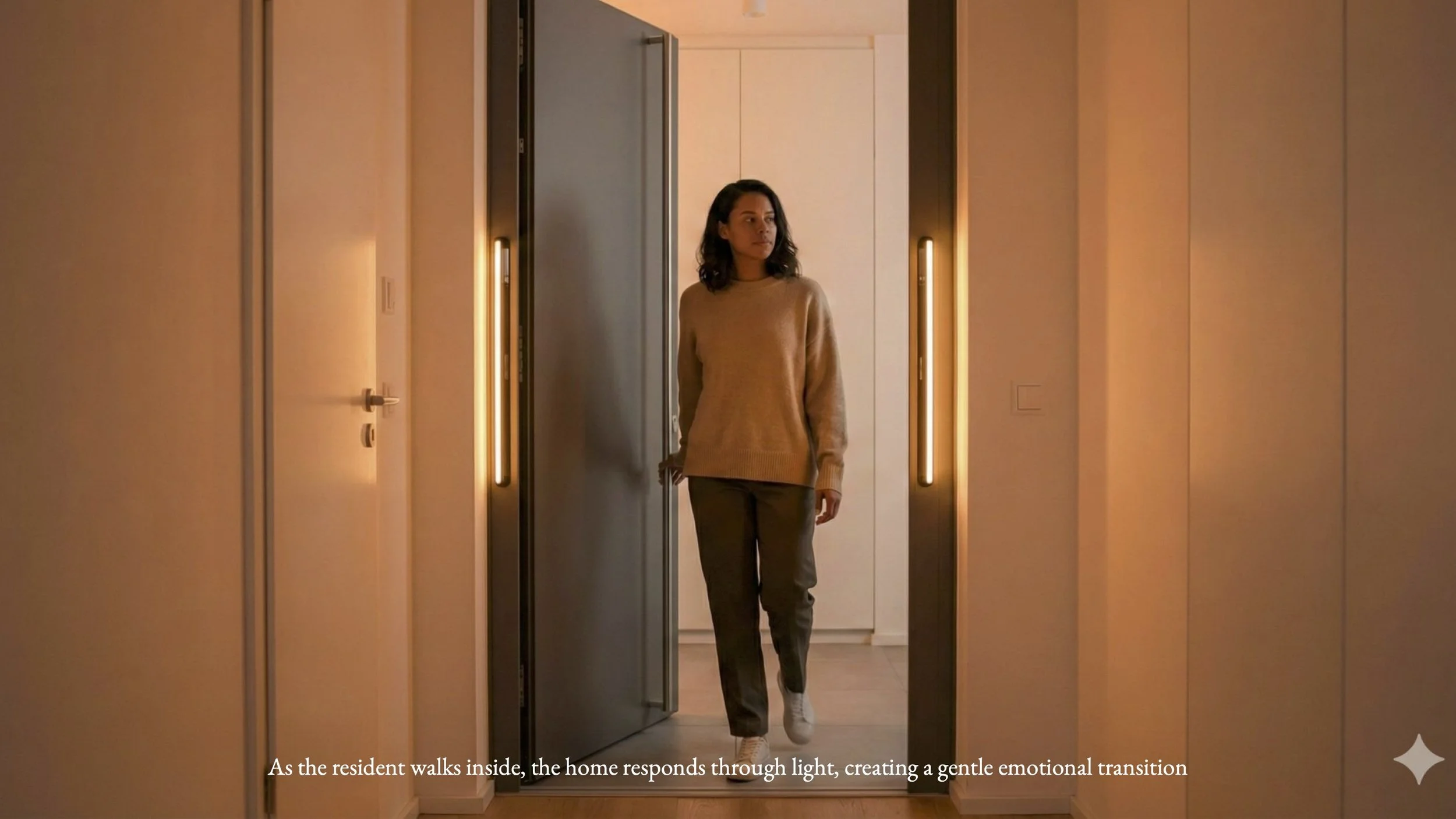
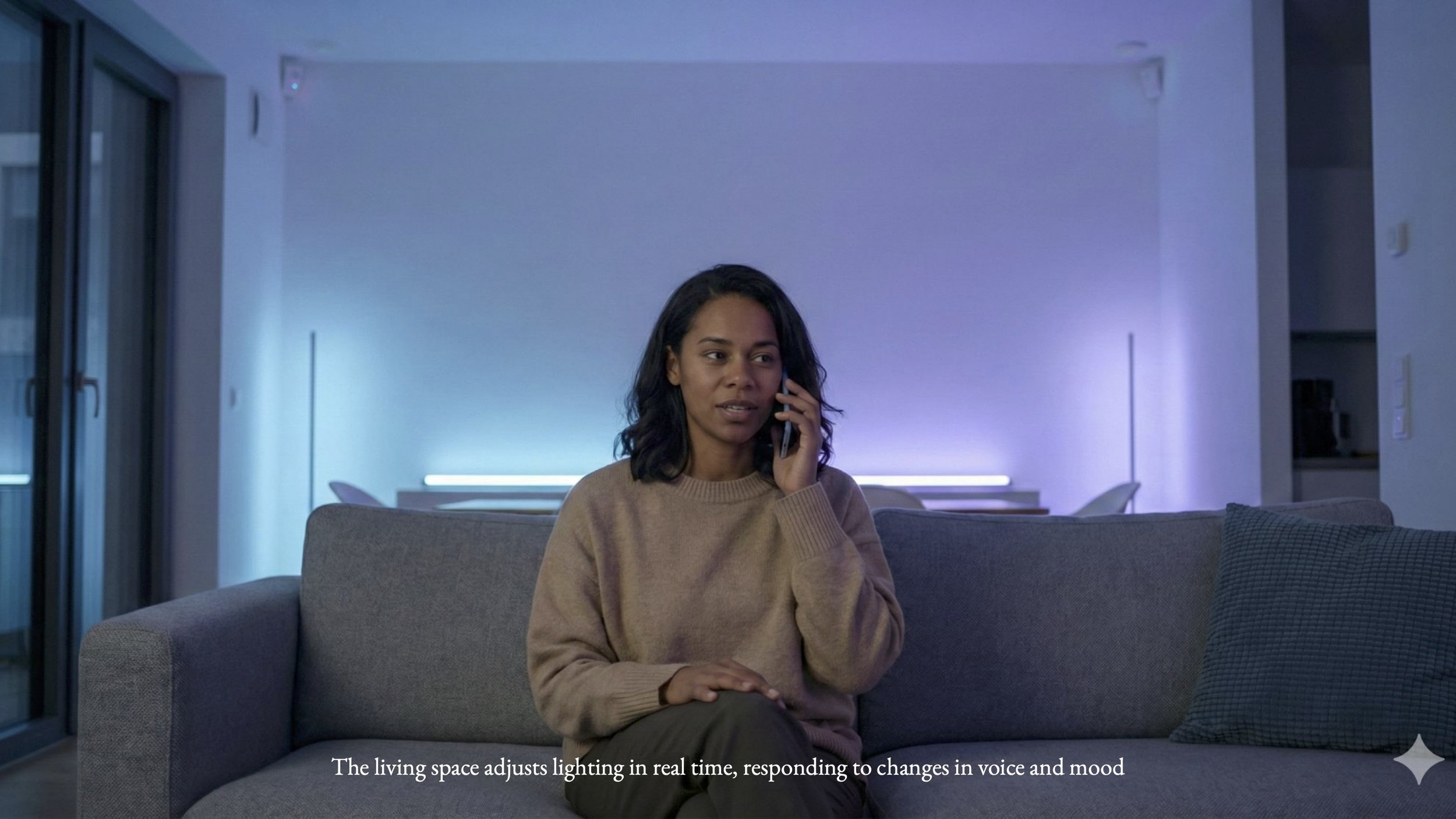
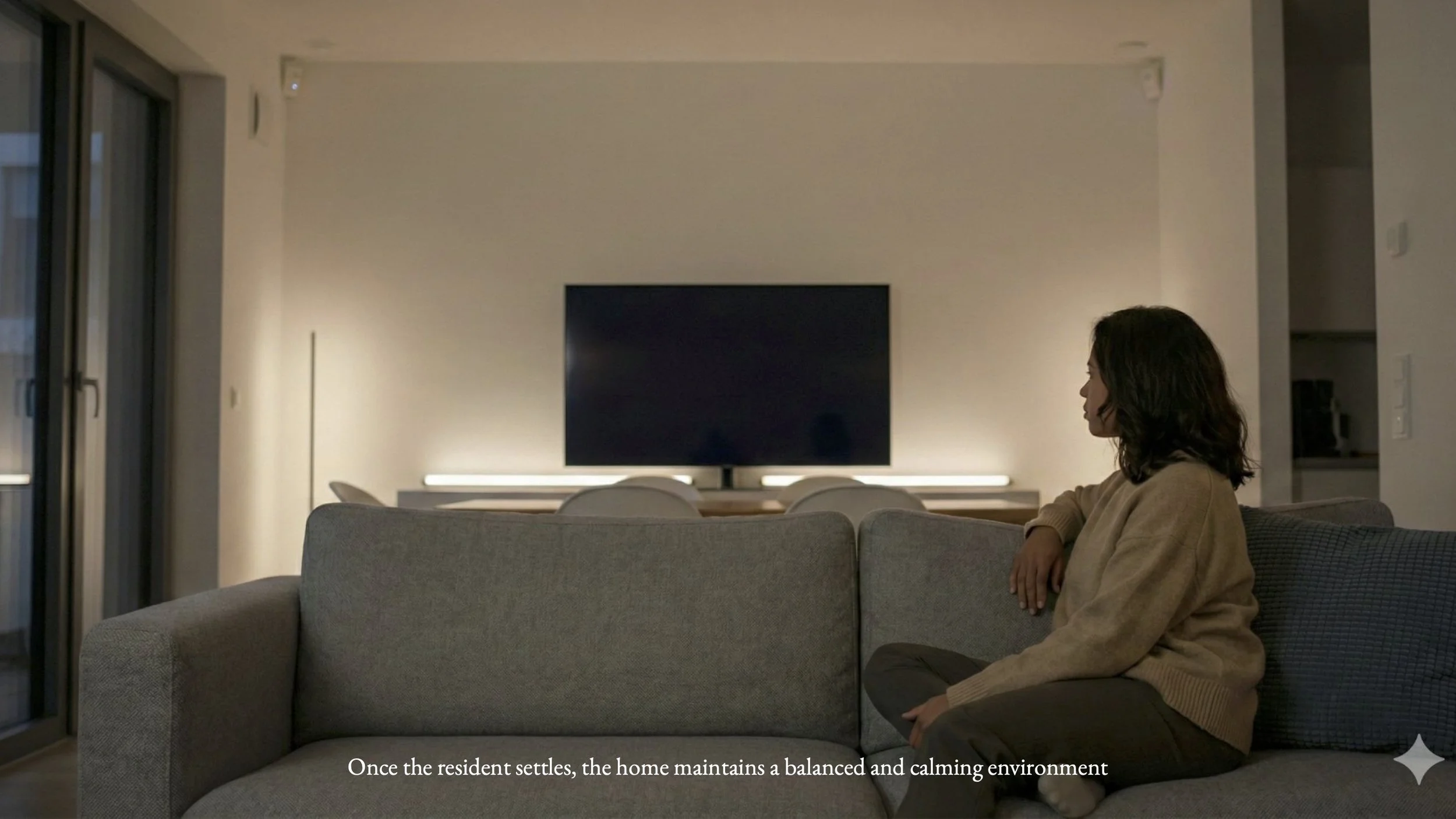
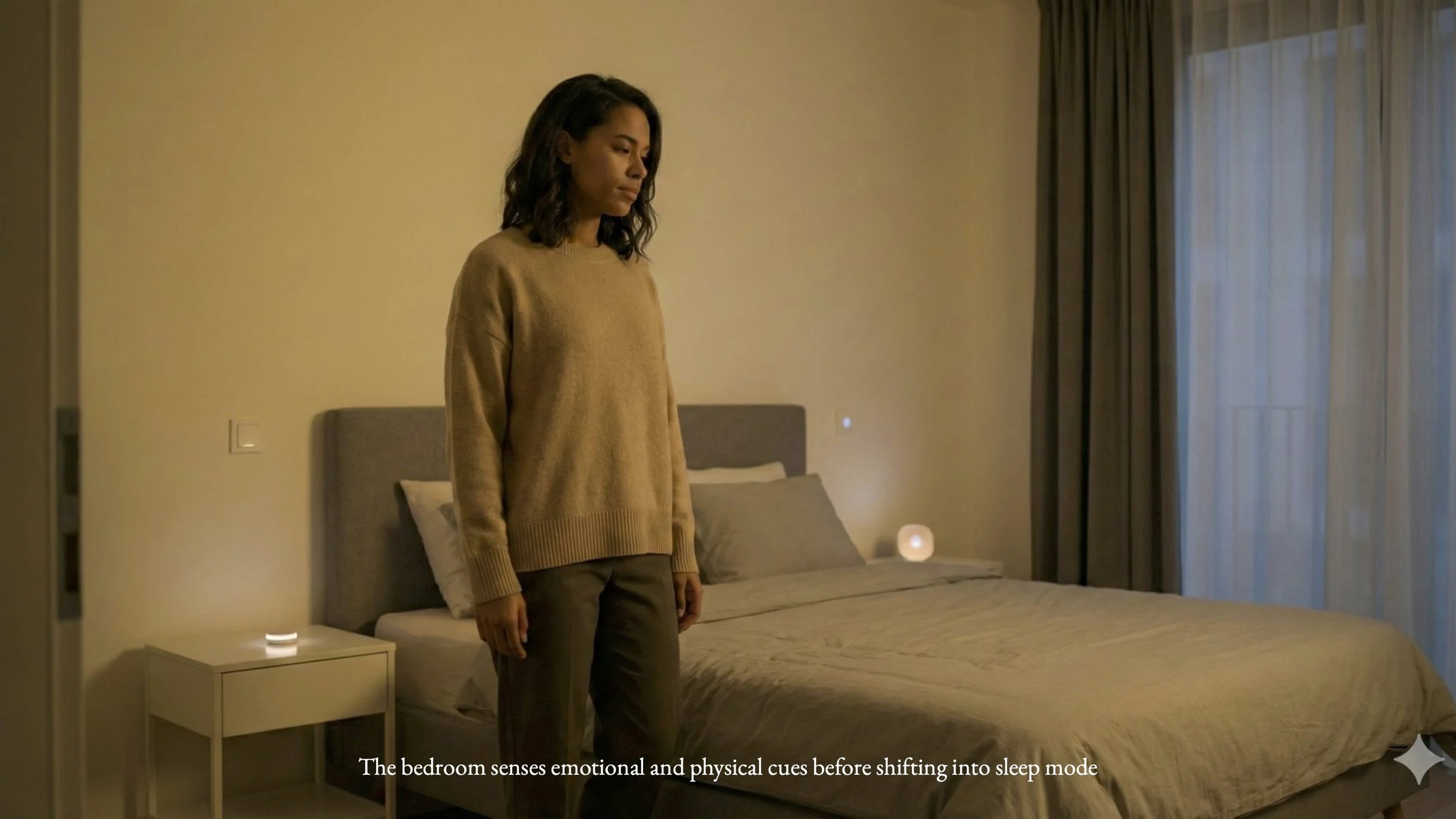
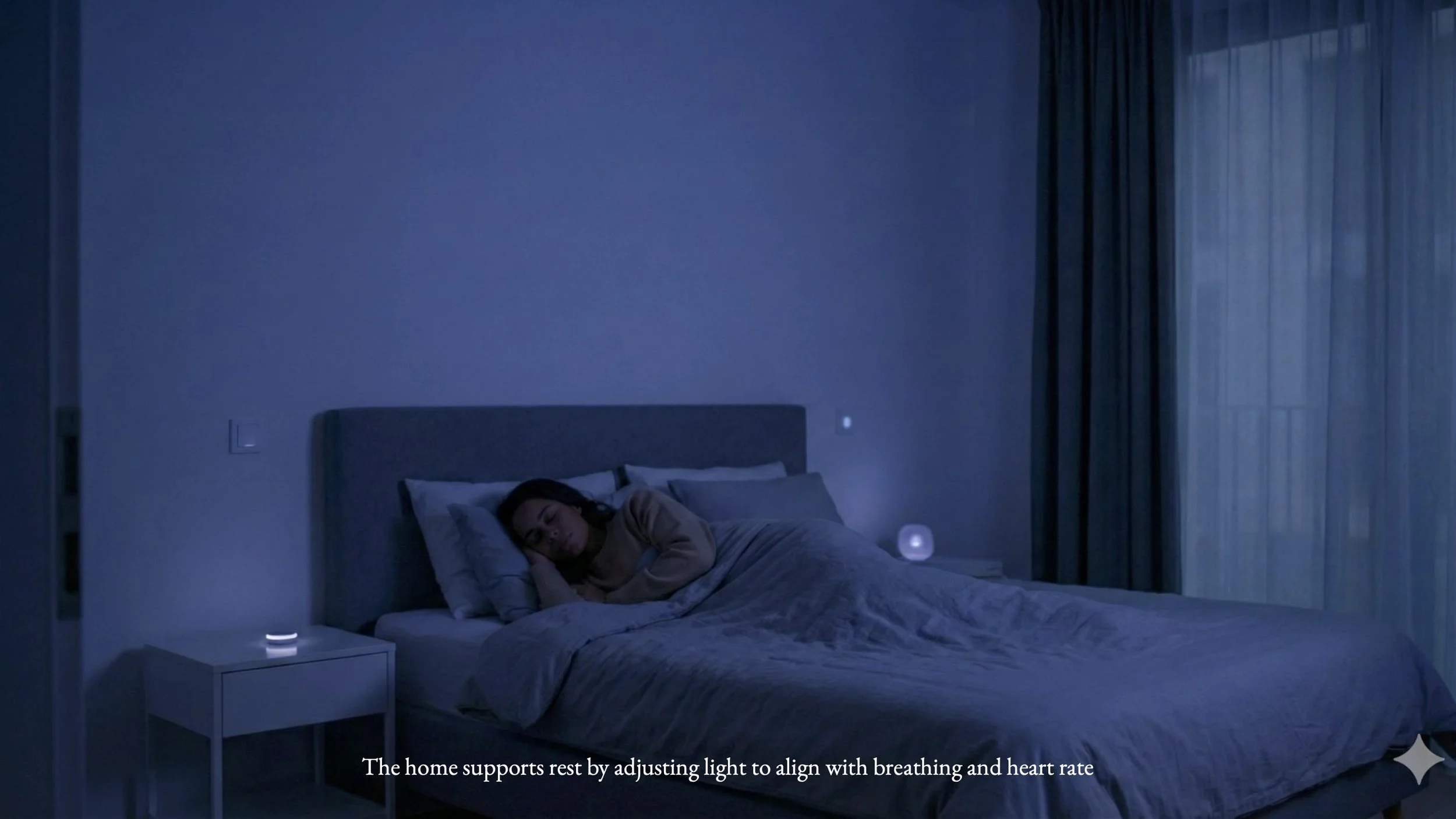
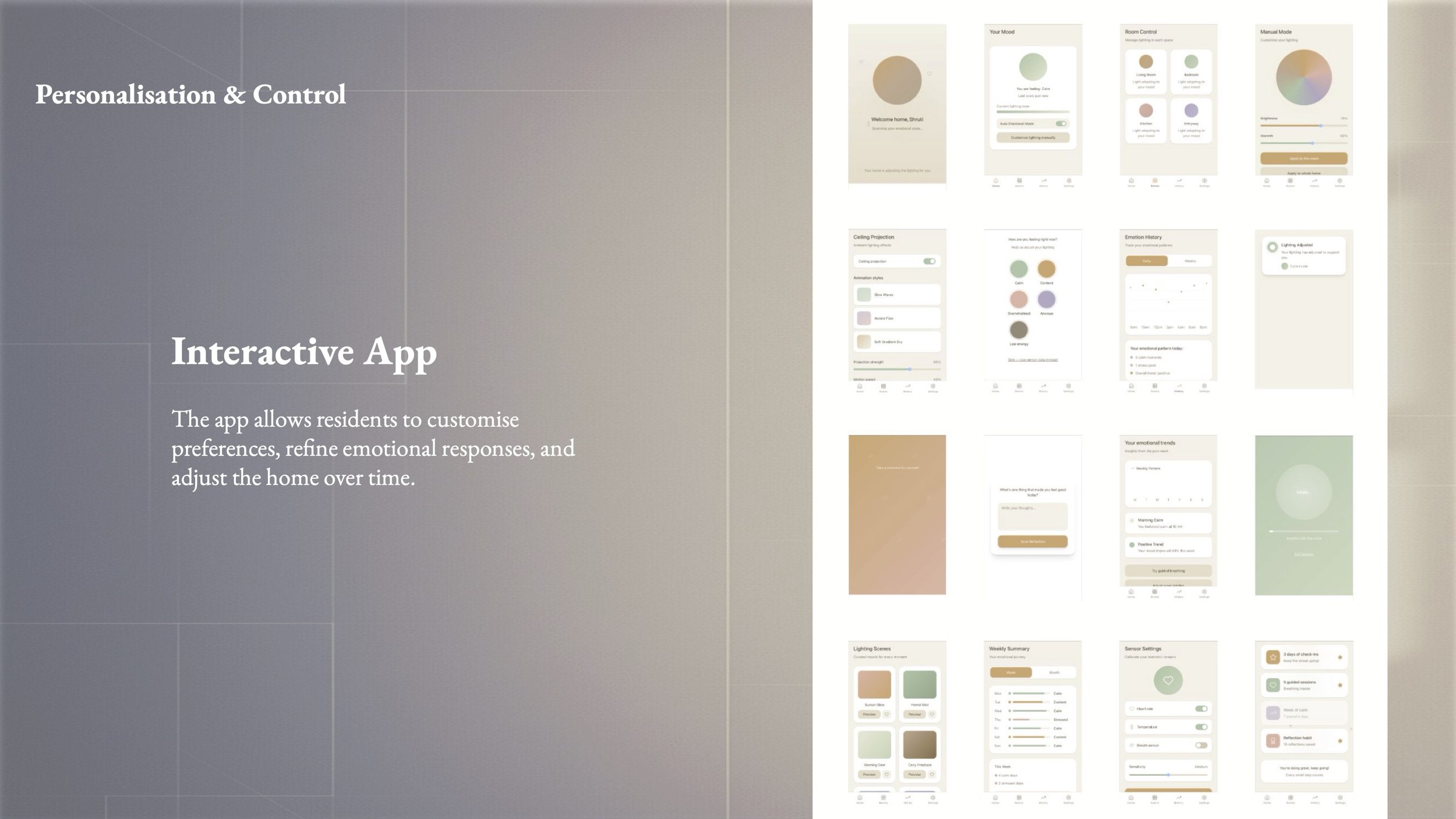

The Overview of the Project
This speculative design project explores how future homes could respond to emotional wellbeing through ambient light, space, and subtle environmental cues. The project focuses on mental health support that is private, non-intrusive, and emotionally aware.
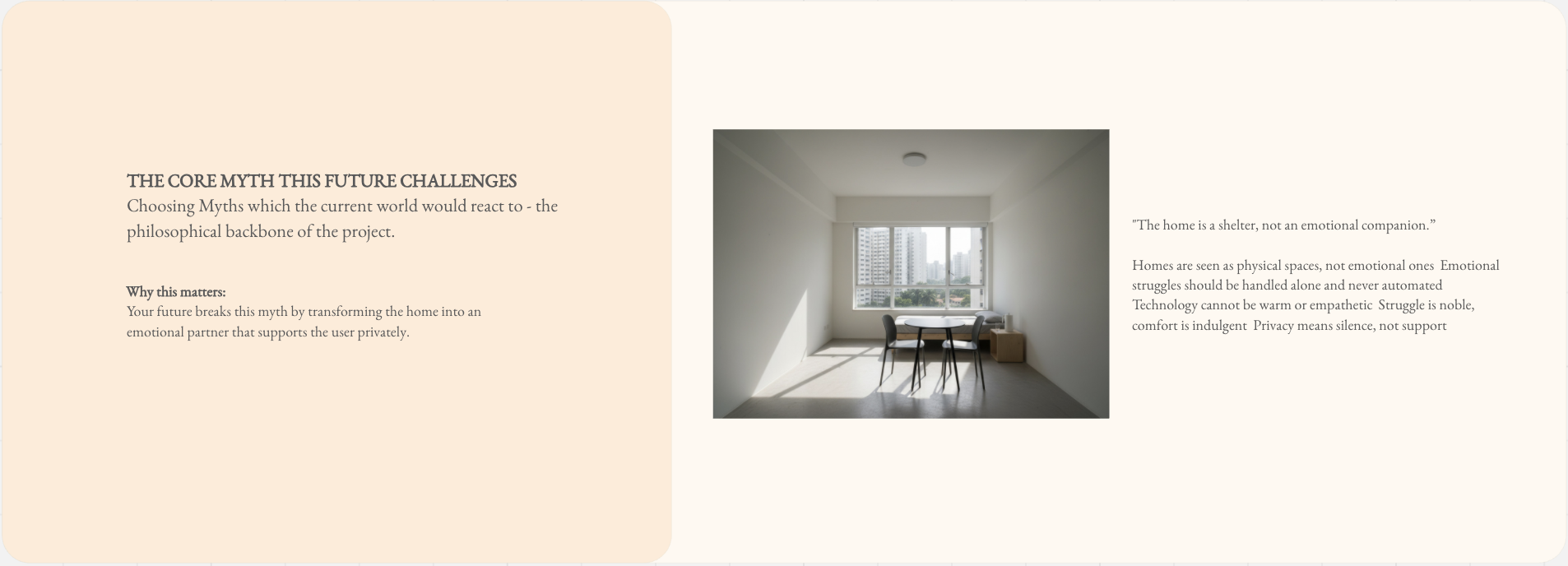
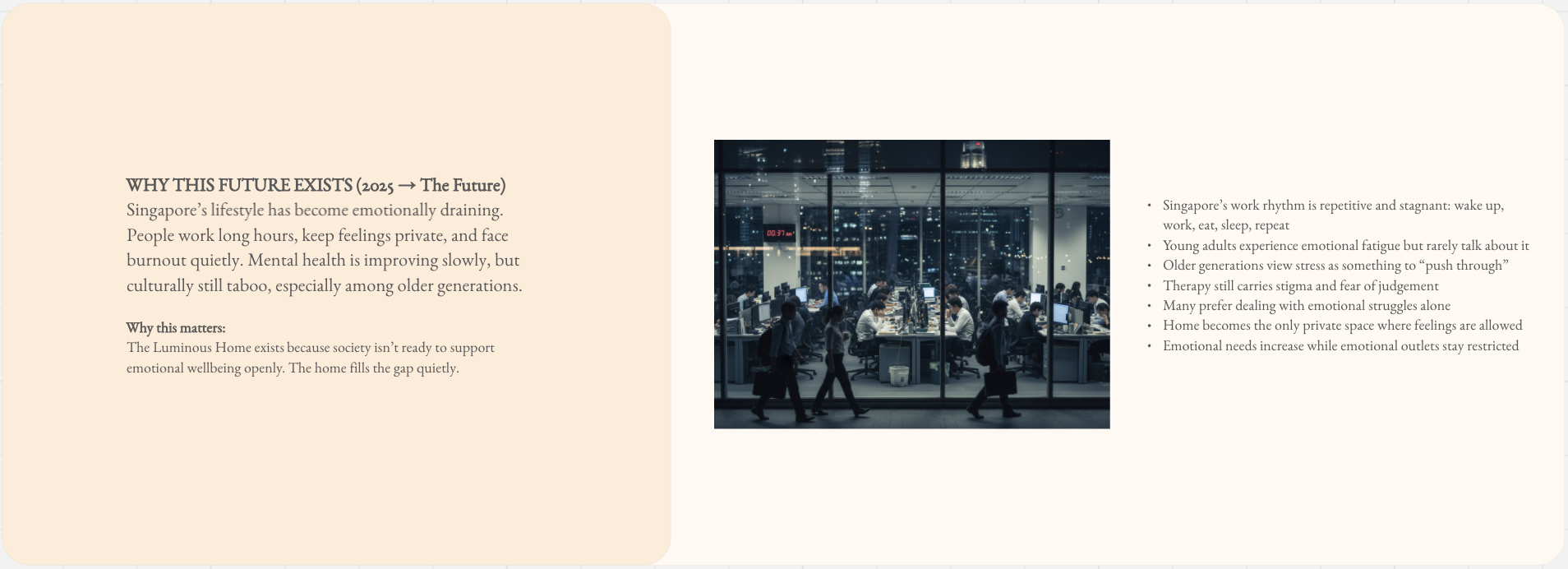
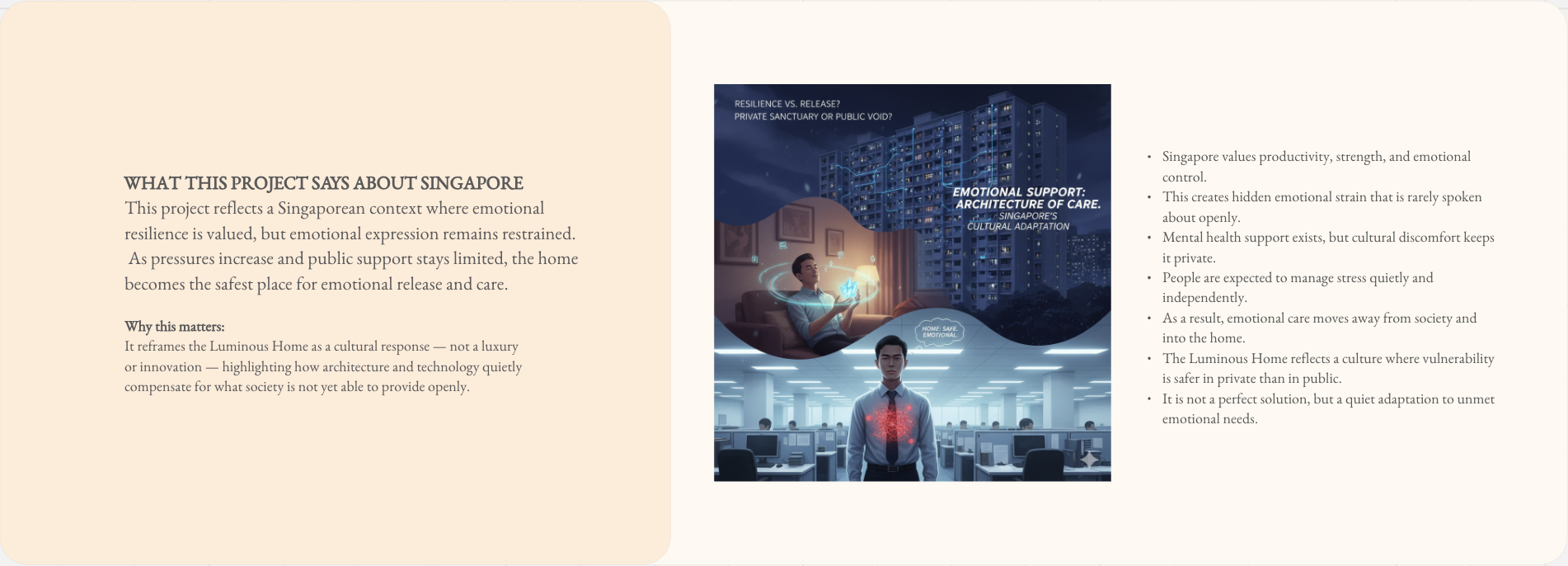
Urban living, productivity culture, and constant digital stimulation have increased emotional fatigue while reducing safe spaces for emotional recovery. Mental health support remains reactive and stigmatized, especially within the home.
This project asks:
How might the home become an emotionally supportive environment without feeling clinical, surveillant, or overwhelming?
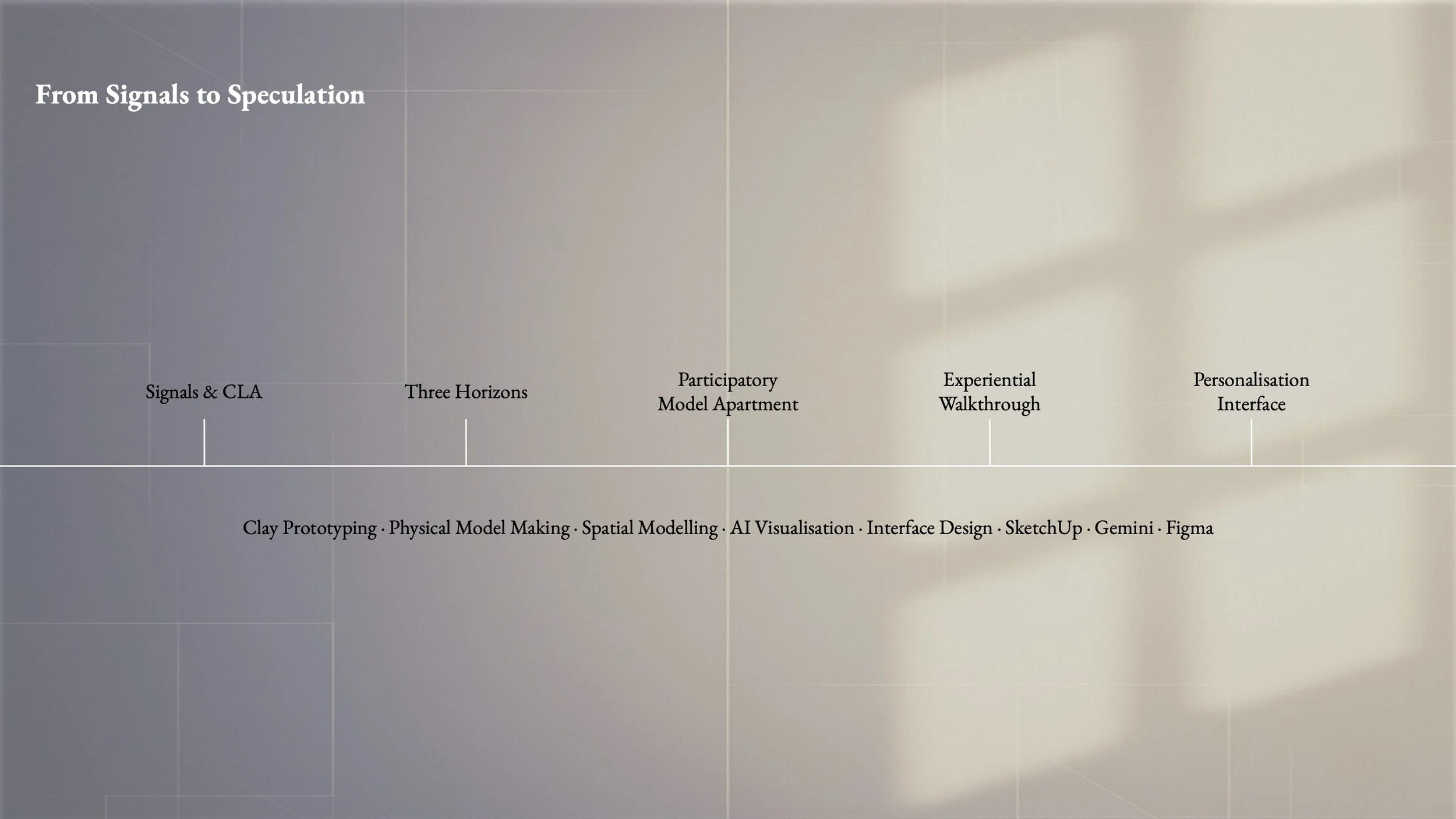
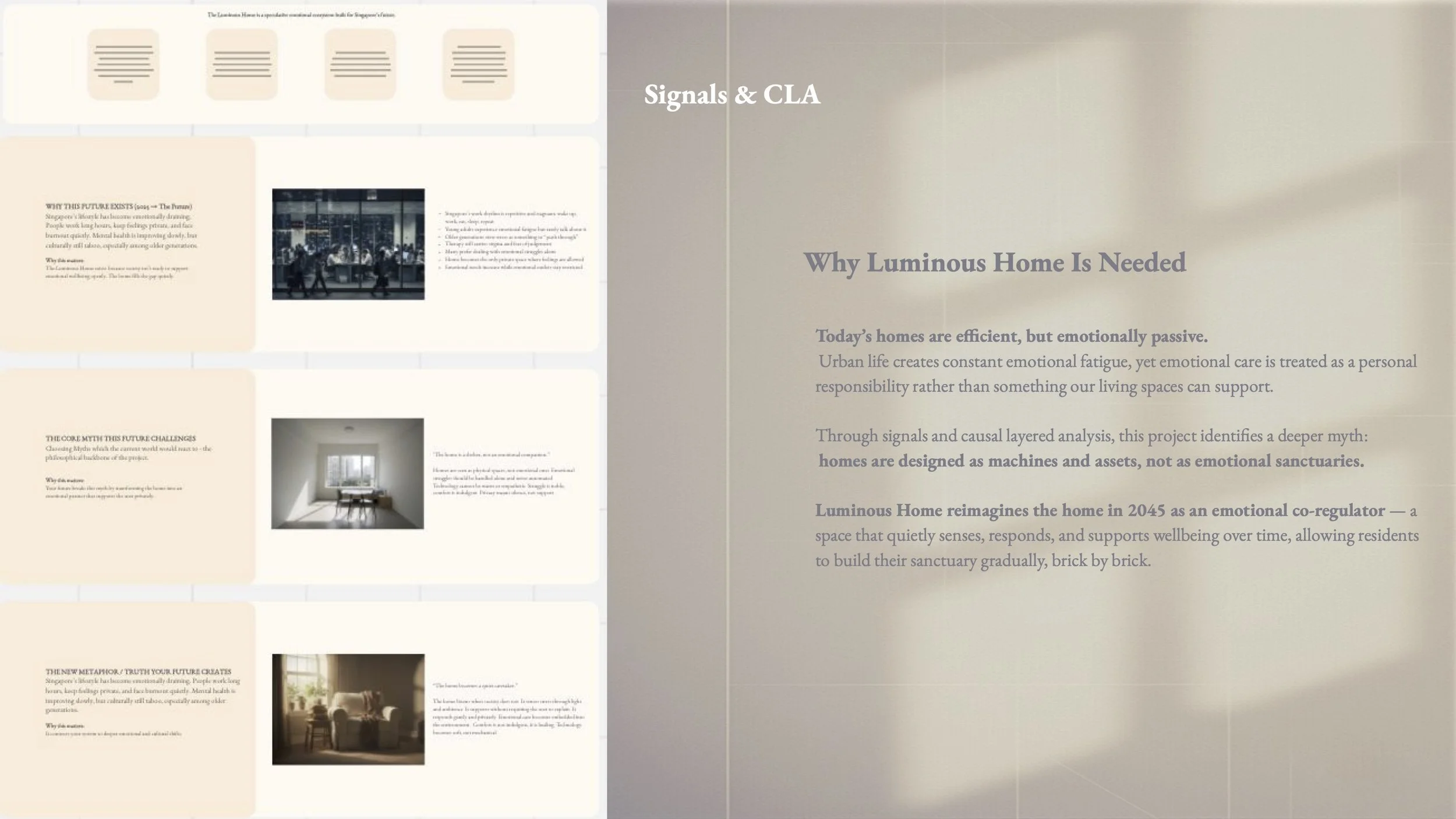
The project is grounded in futures research and qualitative analysis. I conducted signal scanning, trend analysis, and scenario building to explore emerging emotional, cultural, and technological shifts related to mental health and domestic spaces.
Frameworks used include futures scanning, cultural signal mapping, and speculative scenario development.
Future Signals
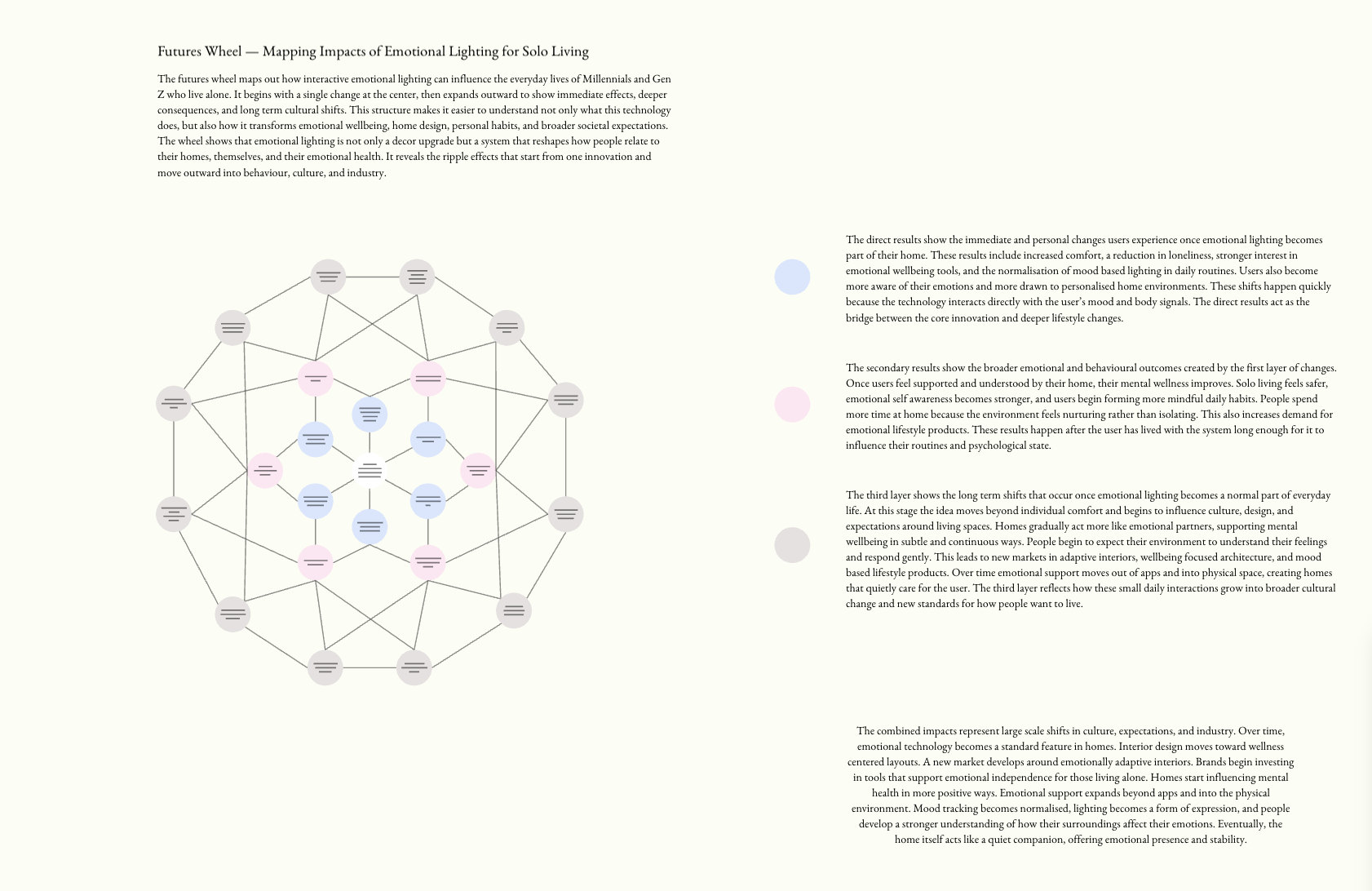
Signals were gathered across culture, technology, and social behavior to identify early indicators of change. These included burnout culture, emotional isolation in dense cities, increased mental health awareness, and the evolution of smart homes from functional to experiential.
These signals helped surface deeper patterns shaping emotional wellbeing in future domestic environments.
Insights Analysis
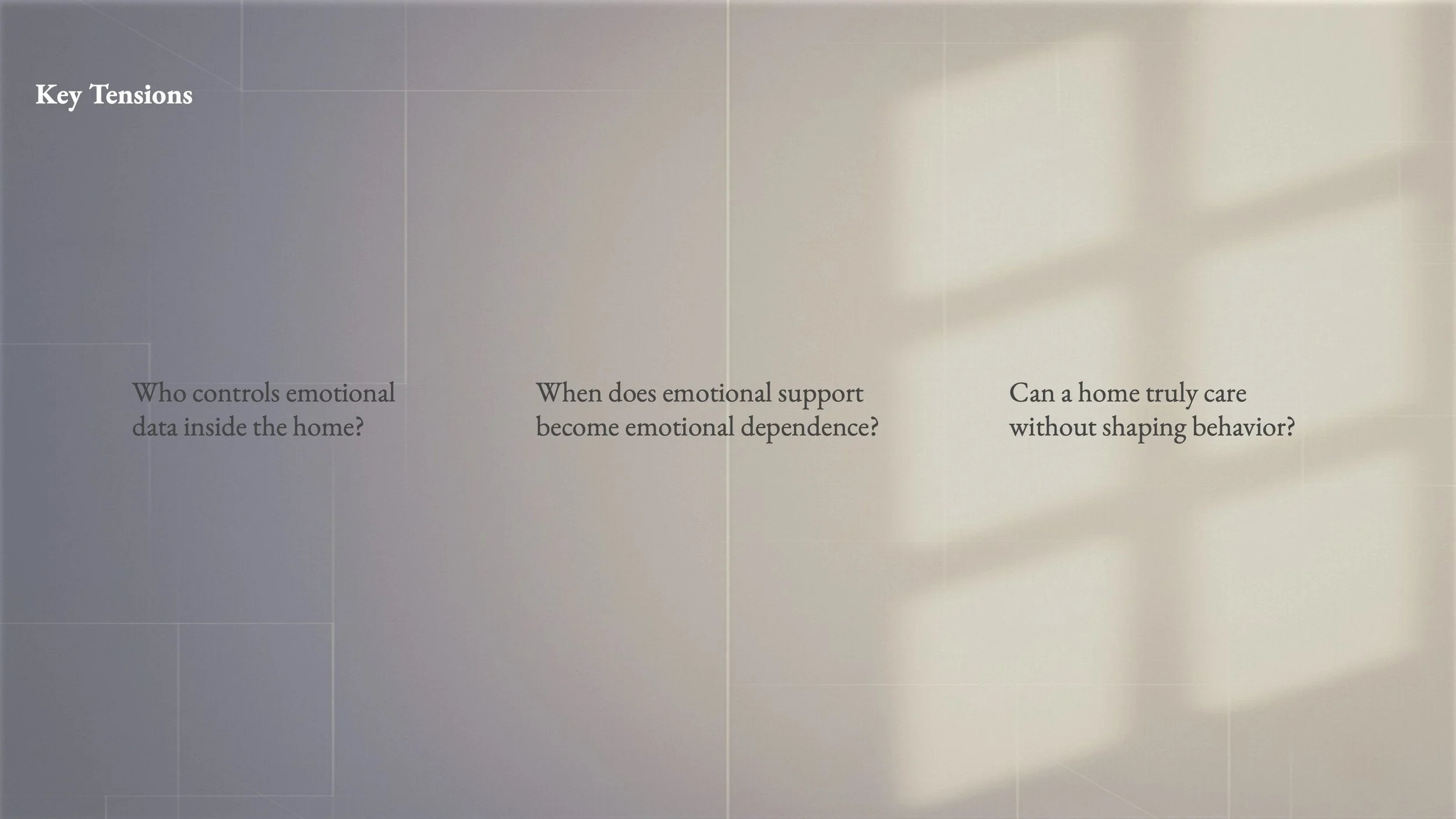
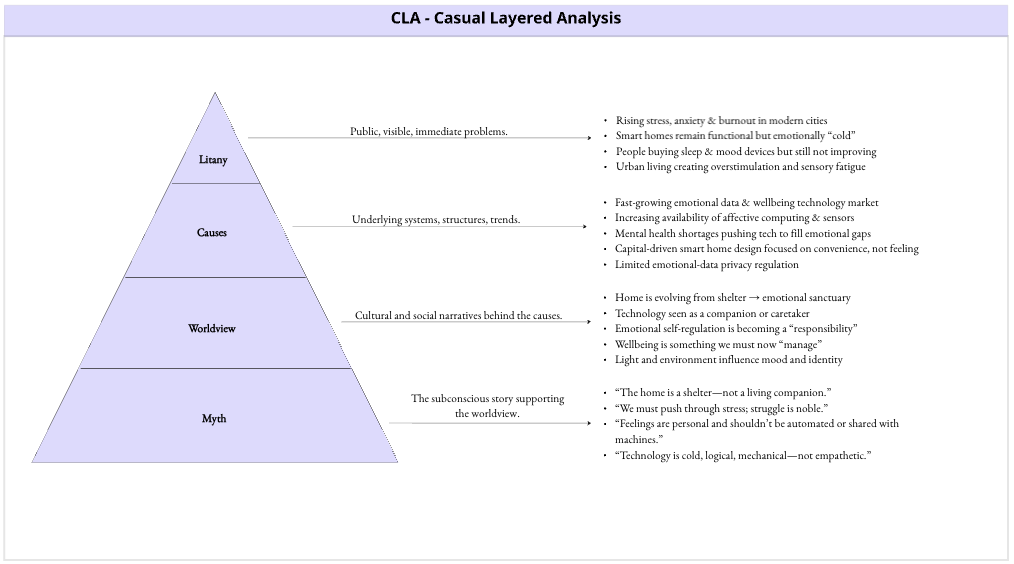
Research was synthesised into key insights that revealed tensions between productivity and rest, privacy and support, automation and empathy.
Key insight: Emotional needs are increasing while emotional outlets remain limited, creating an opportunity for homes to quietly support wellbeing through atmosphere rather than instruction.
Concept Development
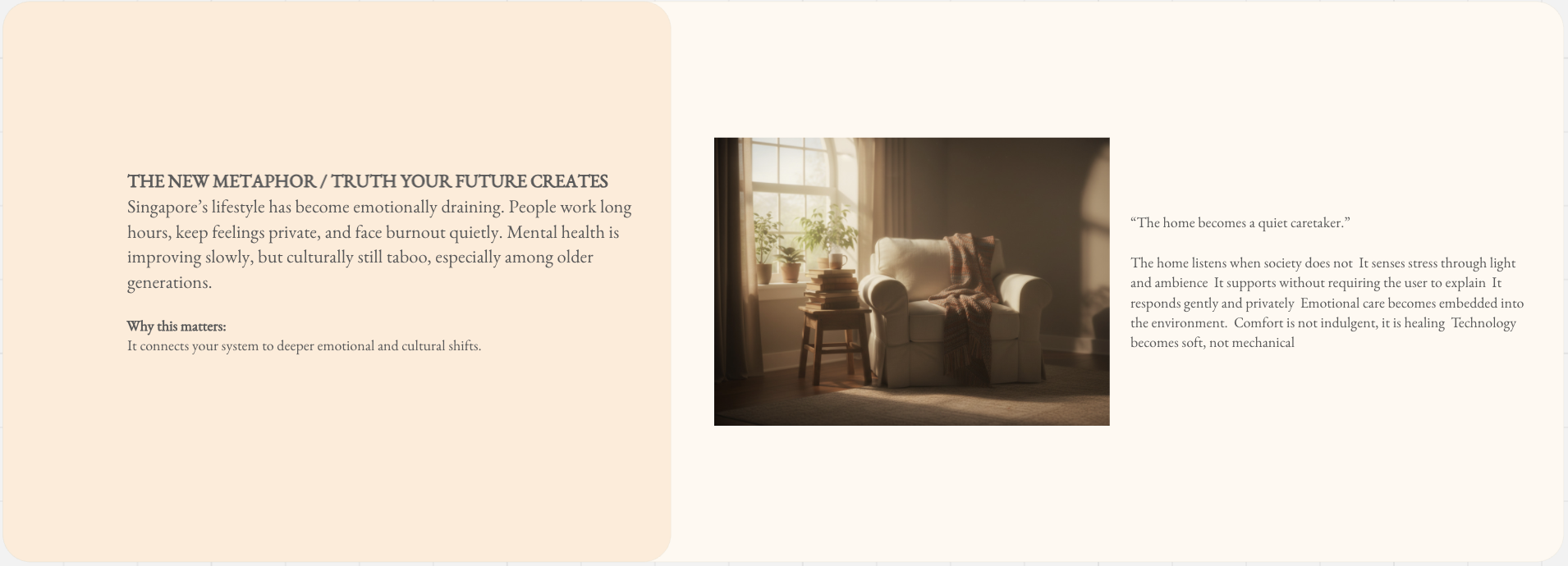
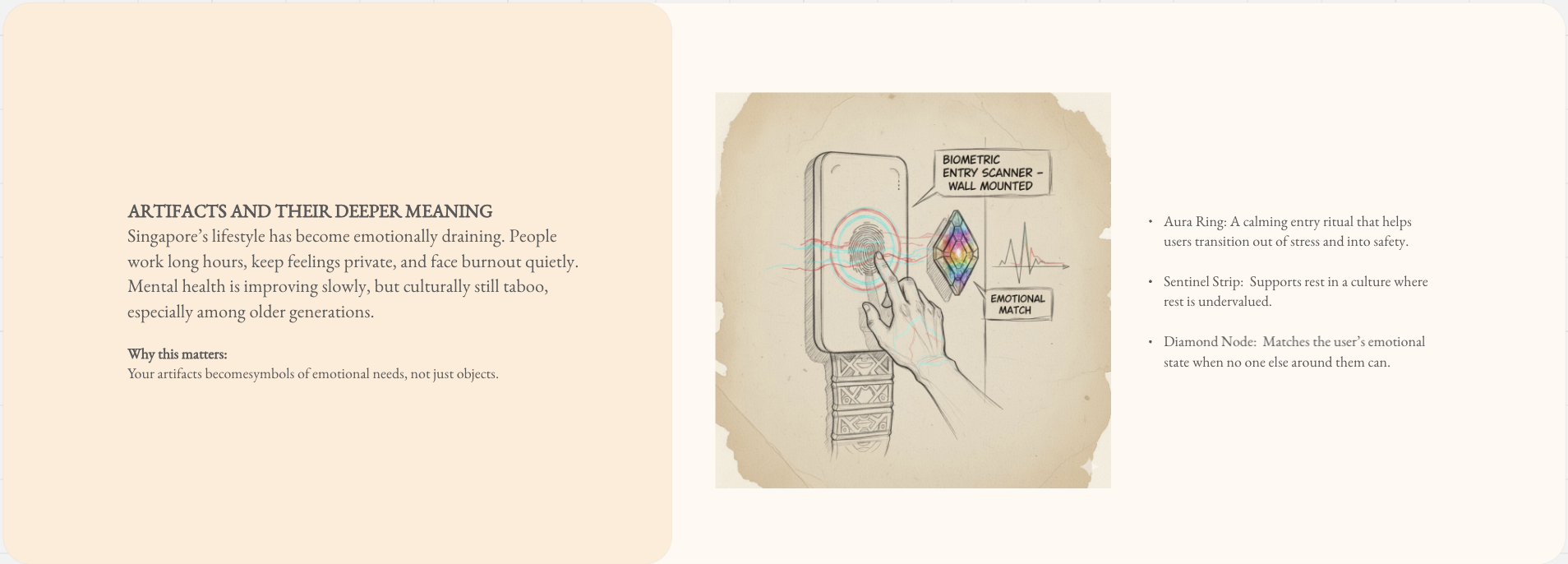
The Luminous Home is an emotional ecosystem that responds to stress, fatigue, and emotional overload through subtle changes in light, atmosphere, and spatial behavior. The system is designed to feel supportive without demanding attention or emotional disclosure.
Ethical Considerations
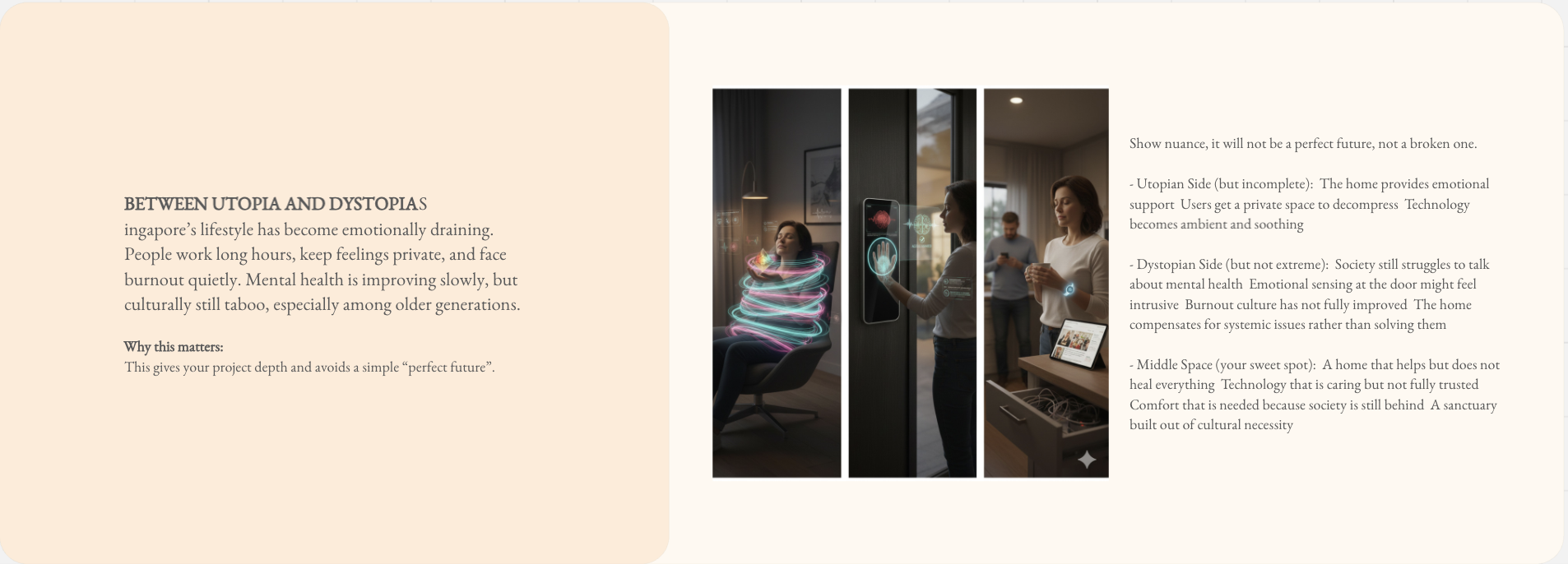
The concept avoids surveillance, diagnosis, or data exposure. Emotional responsiveness is ambient and reversible, ensuring user agency, dignity, and trust. The home supports without judging or recording emotional states.
Future Scenarios
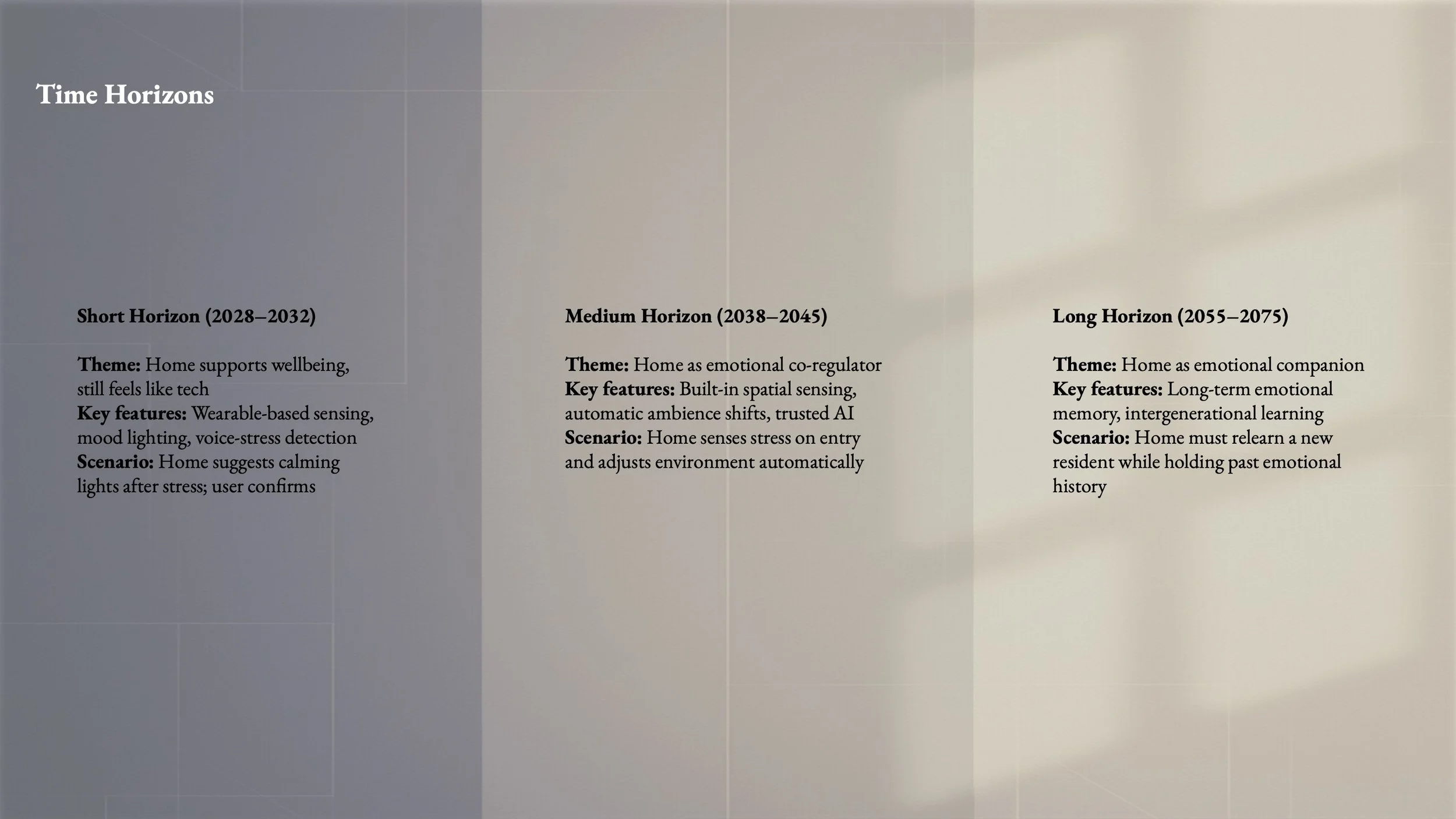
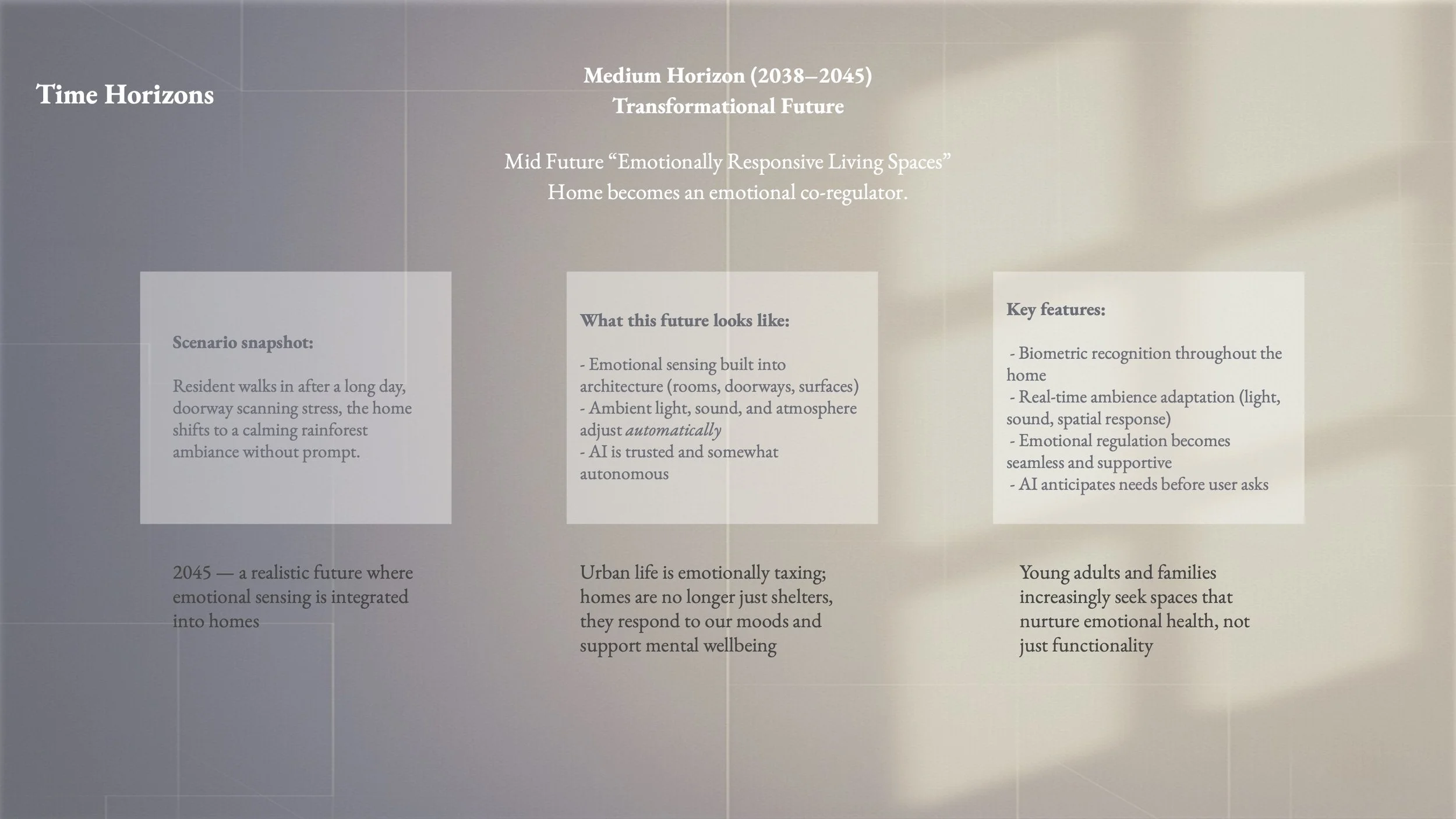
A future scenario was developed to test how emotionally responsive environments might exist within realistic cultural, ethical, and technological constraints. The scenario focuses on a near future where homes adapt to emotional states through light, ambience, and spatial cues rather than explicit interventions.
Experience Design
Light becomes the primary interface. The environment adjusts warmth, brightness, and movement to reflect emotional states such as focus, calm, or recovery. The experience priorities emotional safety, privacy, and non-verbal support.
Outcome & Reflections
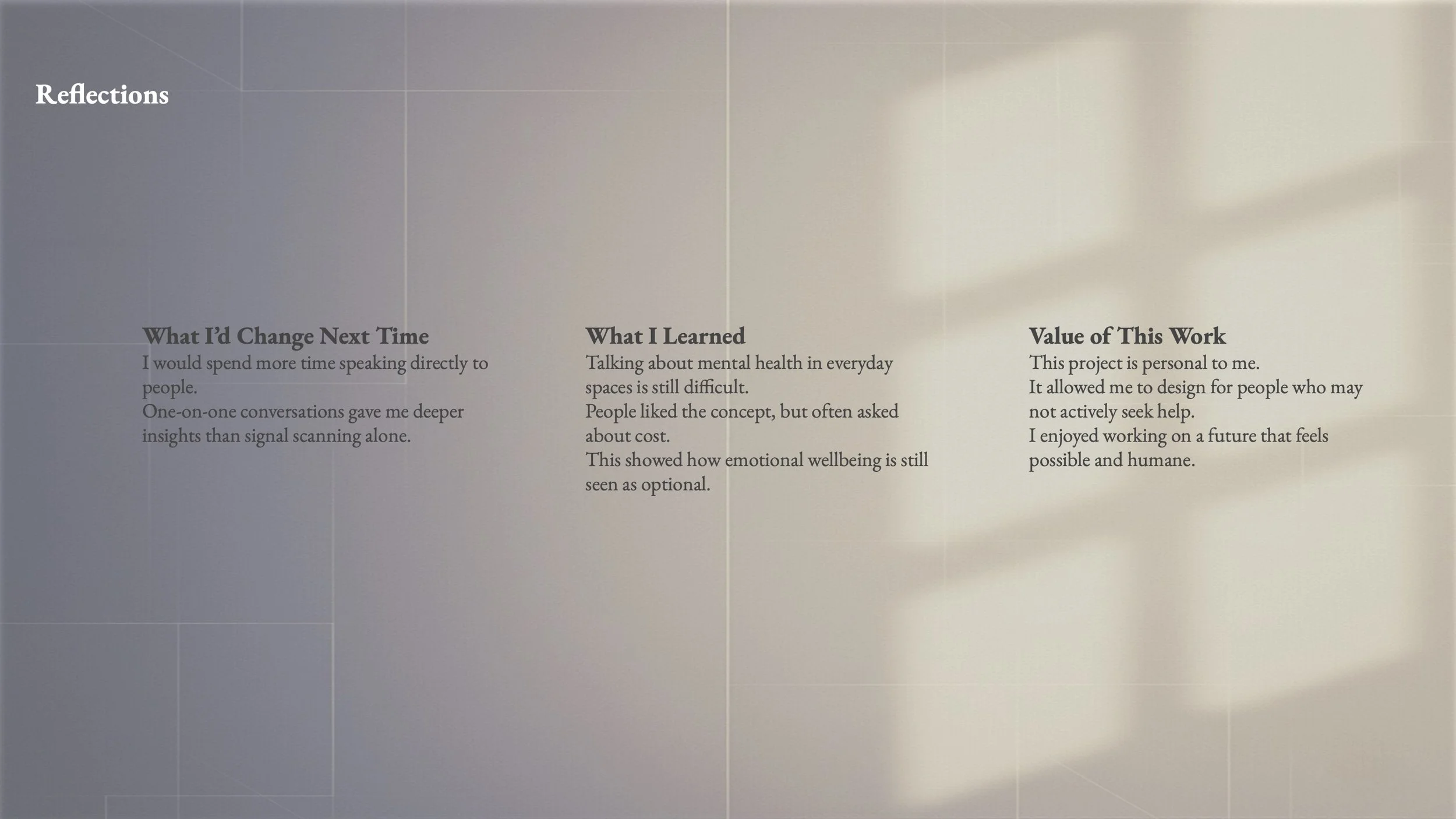
This project demonstrates how research-led speculative design can translate complex emotional challenges into meaningful, human-centered experiences. It reflects my interest in strategy, mental health, futures thinking, and experience design.
View full research process and frameworks on Miro: https://miro.com/app/board/uXjVGVjUrlk=/?share_link_id=823154993487